A guide to wheel balancing
9th November 2026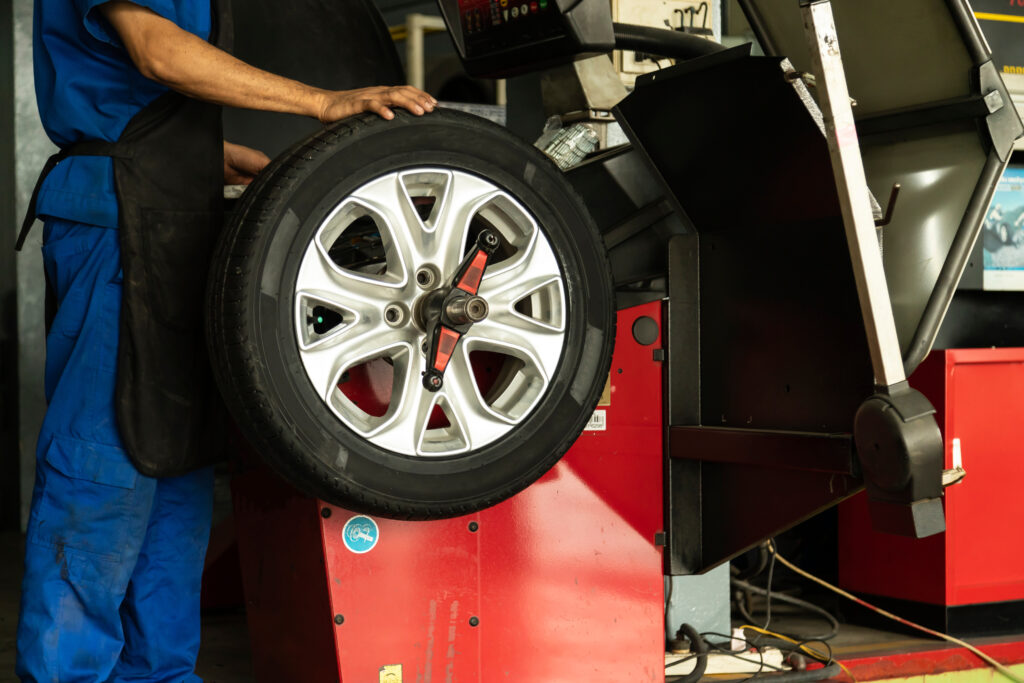
No matter which brand of tyres you fit, spending a little time and money getting them balanced to perfection will pay for itself many times over, explains Paul Cowland.
Ever driven down the motorway and felt that your car had a proper case of the hiccups? Vibrating, jolting, and perhaps even wrestling the steering wheel from your hands? Chances are, it’s a case of wheel imbalance – and not only is it VERY unpleasant to drive around, it’s also costing you a lot of money. So let’s actually go through what it’s all about, and if that sounds like how your car is driving, let’s put it right!
What is wheel balancing?
Let’s start with the basics. Wheel balancing is the process of evening out the weight distribution of a tyre and wheel assembly so it rotates smoothly without vibration. Generally speaking, unless your garage is extremely old-school, this is done with a specialised balancing machine that spins the wheel to detect heavy or light spots, then small corrective weights are added to the rim to counteract any imbalance.
Any mass, like a wheel, when spun at great speed, hugely amplifies any discrepancy in weight across its surface, and even tiny weight differences (of just a few grams) become significant at speed due to centrifugal force.
Why is wheel balancing needed?
As hard as we all try to make them absolutely perfect, minute manufacturing variations mean that almost no tyre or wheel is perfectly uniform in weight or shape. That said, generally speaking the higher quality of tyre you fit, the less weight it often needs.
If left unbalanced, with no corrective weight at all, wheels invariably cause vibrations (felt in the steering wheel, seat or floor, usually around 50 -70+ mph. Exactly where you want to be cruising in comfort…
Not only is this incredibly jarring for your passengers (and tiring for you) this also leads to uneven (cupped or patchy) tyre wear, shorter tyre life, and extra stress on suspension components, bearings, and steering parts. And this is where it starts to cost you serious money – but there’s an easy fix, you’ll be delighted to know.
Proper balancing delivers a smoother, quieter ride, better handling, improved safety, and can help maintain fuel efficiency. It’ll also make sure the kids get a good nap on the way back from the in-laws, and the dozen eggs in the weekly shop aren’t scrambled before you unpack them.
Do brand new tyres need balancing?
Oh yes, even a beautifully finished Envoy, fresh off the line, quality checked and lovingly shipped to your local Envoy dealer will still need a little tweaking, once fitted. New tyres still need balancing, because rubber being an organic material, factory tolerances leave slight weight and uniformity variations that only become noticeable once the tyre is mounted and driven at speed.
As for used tyres, they can gradually lose balance as the tread wears unevenly, or after impacts from kerbs or potholes, repairs, or when balance weights fall off. Even if you’re the most careful driver in the world, chances are your existing tyres will fall out of tolerance at some point. So balancing (or re-balancing) is recommended whenever new tyres are fitted, after puncture repairs, during tyre rotations, or whenever vibration appears. Make it a regular part of your maintenance plan, because, as I’ve said, skipping it shortens tyre life and can lead to more expensive suspension repairs later.
The importance of correct tyre placement (those red and yellow dots)
Have a look at a new(ish) tyre and you’ll perhaps notice a red and yellow dot printing around the sidewall. But why are they there? Many new tyres have temporary coloured dots that act as mounting guides to optimise the initial balance and ride quality.
The yellow dot marks the tyre’s lightest point. It is normally aligned with the valve stem (often the heaviest point on the wheel) to reduce the amount of corrective weight needed.
The red dot marks the point of maximum radial force variation (the “high” or stiffest point). When the wheel has a low-point mark (dimple, notch or sticker), the red dot is matched to it for the best uniformity and smoothest ride.
Correct placement of these dots (especially giving priority to the red dot when a wheel low-point mark exists) minimises residual imbalance and vibration before the final machine balancing is carried out. You can tell a quality fitter by those that do it, because this match-mounting step helps achieve a better-balanced assembly with fewer weights and longer-lasting, quieter performance.
But why does that matter? Surely, a balanced wheel is a balanced wheel? Who cares how many weights it takes? While that’s technically true, accepted wisdom is to balance the wheel with the fewest weights possible. Not only does it mean there’s less chance of losing one, causing an instant imbalance, but as we learned at the start of our physics lesson, weight gets amplified when spun at speed. So less weight keeps your car lighter on its feet.
The cost of wheel balancing varies from place to place, from as little as £10 a tyre up to around £25, but the results are always worth the investment. Smoother driving, longer tyre life, happier chassis components and unruffled passengers. Who wouldn’t spend £100 on that?
So, put wheel balancing on your ‘to do’ list as part of your service. It’s one tiny bill that prevents a ton of other bills further down the line, and better still, stops your takeaway flat white from becoming a cappuccino.